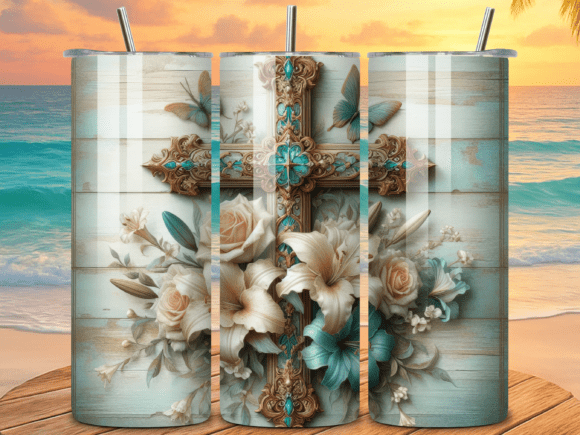
Roses Christian Cross Tumbler Wraps PNG
A Quiet, Reverent Design That Stitches with Intention
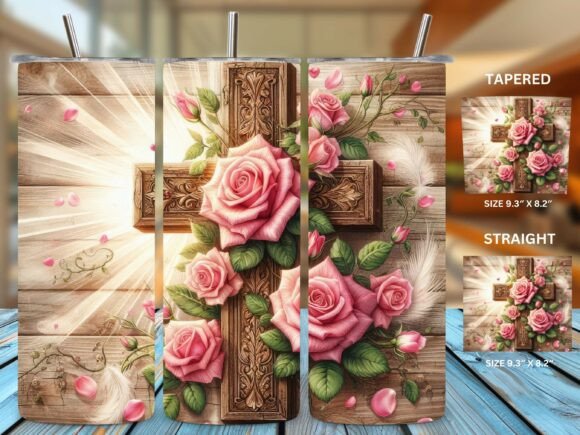
First glance at Roses Christian Cross Tumbler Wraps PNG feels like opening a well-worn devotional journal—soft, centered, and gently layered with meaning. The cross is clean-lined but not stark; the roses are stylized, not botanical—petals curl with quiet reverence, not dramatic flourish. There’s no clutter, no ornate border, no forced symmetry. It breathes. That matters more than you’d think when you’re hooping up for a 3 a.m. embroidery run on a client’s custom baby blanket or prepping 20 identical aprons for a church bazaar.
Where This Design Finds Its Truest Home
I recently tested Roses Christian Cross Tumbler Wraps PNG on a natural linen tea towel destined for a pastor’s retirement gift—and it landed perfectly. The design scaled cleanly to 4.2" wide, sat comfortably in the lower corner, and stitched out with confident clarity using medium-weight cutaway stabilizer. No puckering. No thread nesting. Just soft satin-stitched petals and a smooth cross outline that read as both handmade and intentional.
It shines brightest on projects where faith meets function: embroidered tote bags for women’s Bible studies, sweatshirt cuffs for youth group volunteers, pillow covers for nursery decor, or even small iron-on patches for camp uniforms. I’ve also used it (with minor scaling) on the front of cotton-blend baby onesies—paired with pale pink thread—and the subtlety made it feel personal, not preachy. That balance is rare.
For Etsy sellers and small shop owners, this isn’t a “trend-chasing” file—it’s a steady, repeatable asset. It fits naturally into collections of faith-based embroidery files without competing for attention. Customers recognize sincerity faster than flash.
Fabrics and Surfaces: Where It Excels (and Where to Pause)
Roses Christian Cross Tumbler Wraps PNG performs reliably on stable, medium-weight fabrics: quilting cotton, twill, canvas, midweight knits, and linen blends. On a structured cotton tote? Crisp. On a brushed cotton sweatshirt? Warm and grounded. On a lightweight kitchen towel? Delicate but legible—especially with a light tear-away stabilizer underneath.
Use caution on highly textured surfaces (like bouclé or heavy terry cloth), where petal definition can blur. Avoid it on ultra-thin polyesters or slippery rayon unless you’re using an adhesive + cutaway combo and testing extensively. Stretchy fabrics demand extra stabilization—and consider simplifying the rose outline manually if stitch density feels too aggressive for the fabric’s give.
Curved surfaces—like caps or tumblers themselves—are tricky. While the design was named for tumbler wraps, its current layout isn’t inherently wrap-friendly (no seam allowance or distortion correction built in). If you’re adapting it for cylindrical use, plan for manual warping in your digitizing software—or treat it as a flat-panel accent instead.
Dark Fabric? Light Fabric? Think Contrast, Not Assumption
This design relies on shape and rhythm—not heavy fill—to communicate. That means contrast becomes your co-designer. On charcoal gray twill, I used ecru thread: soft, respectful, and highly readable. On ivory linen, deep burgundy thread gave warmth without overwhelming. Avoid matching thread to fabric tone unless you want a subtle, almost-embossed effect (which works beautifully on high-end boutique items—but won’t pop for gifting).
Test it in black-and-white mockups before finalizing. The cross and rose silhouette hold up well in grayscale—meaning it translates cleanly to printed product previews, digital listings, and even simple line-art branding.
Stitching Realities: Density, Detail, and Practical Flow
The fill areas are generous but not dense—no overheating risk on home machines, and minimal thread consumption per piece. Petals use gentle satin stitch with moderate underlay; the cross uses clean running and satin combos. No micro-details that vanish at smaller sizes or snag during trimming. That’s thoughtful digitizing—not accidental simplicity.
That said, don’t push it below 3" wide. At 2.5", the inner rose curves begin to lose distinction, and the cross arms thin out just enough to feel fragile. For baby embroidery or tiny patches, stick to 3.25" minimum—and always test on scrap first. Also: inspect the corners. Some versions of floral crosses accumulate tiny jump stitches there. A quick cleanup in your embroidery software saves hours later.
What This Design Says About Your Brand—and Your Customers
Using Roses Christian Cross Tumbler Wraps PNG signals care—not just craft. It doesn’t shout. It invites. That builds trust, especially for personalized gifts, church merchandise, or boutique apparel where buyers seek meaning over mass production.
Customers notice when a design feels considered—not just placed. When the roses align with the grain of a linen pillow cover, or when the cross centers perfectly on a tote strap seam, it reads as professional. That perception lifts perceived value, supports higher pricing, and encourages repeat orders.
For Etsy sellers, it’s a quiet differentiator in a sea of glitter-cross fonts and cartoonish angels. It pairs seamlessly with neutral palettes, minimalist packaging, and handwritten thank-you notes—reinforcing cohesive brand storytelling.
Five Must-Do Designer Checks Before You Stitch
- Test on scrap fabric—same type, same stabilizer, same thread—as your final project.
- Review stitch density in your embroidery software. Adjust if needed for your machine’s power or fabric weight.
- Confirm hoop size compatibility. This design fits standard 4x4 and 5x7 hoops comfortably—but verify before batching.
- Inspect small details at 200% zoom: check for stray stitches, overlapping nodes, or unbalanced underlay.
- Verify licensing before selling finished products or reselling the file. Commercial use rights vary—and clarity here protects your craft business long term.
Final Thought: A Design That Serves, Not Shouts
Roses Christian Cross Tumbler Wraps PNG won’t dominate a tradeshow booth. It won’t go viral on TikTok. But it will sit quietly on a grandmother’s prayer shawl, hold space on a child’s baptismal onesie, and anchor a small shop’s best-selling holiday collection—year after year. In embroidery, that kind of quiet endurance is rarer—and more valuable—than any trending motif. Use it with intention. Stitch it with care. And let the roses speak for themselves.