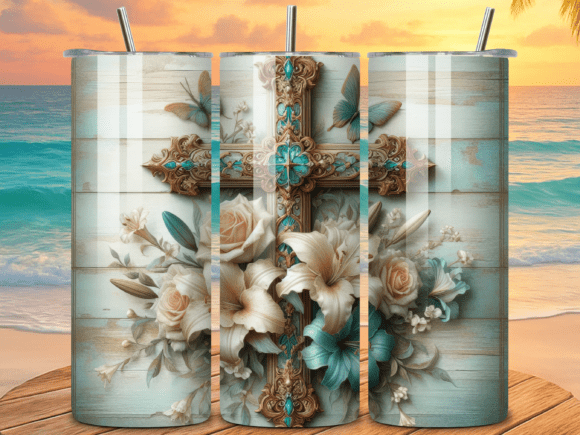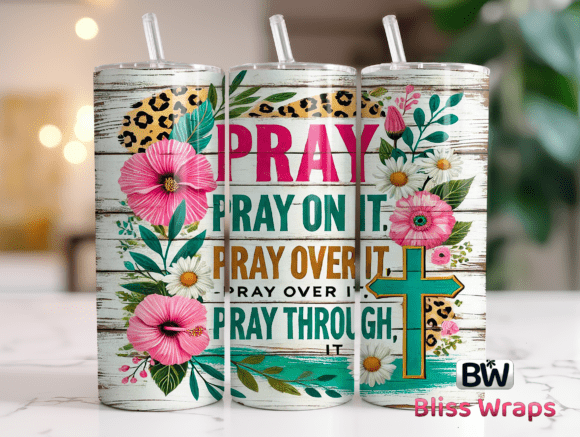
Inspirational Faith Christian Tumbler
A Design That Speaks Before the Needle Moves
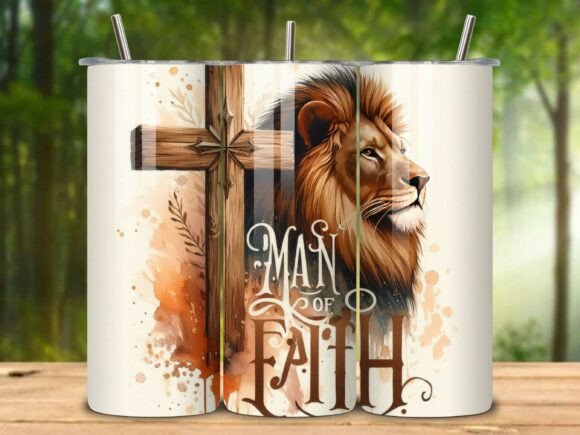
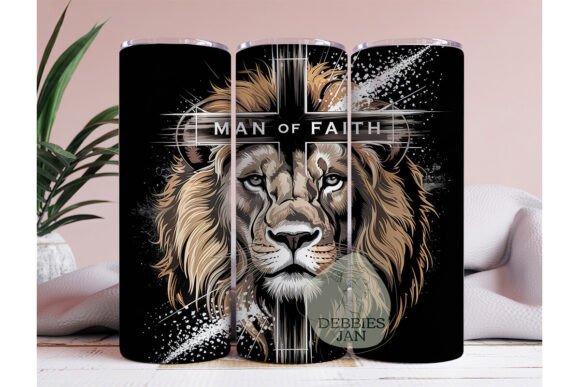
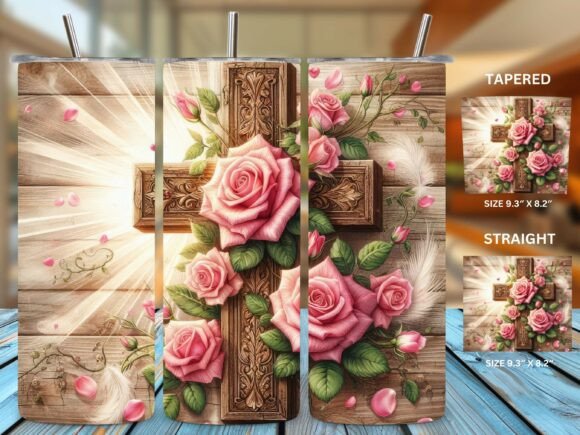
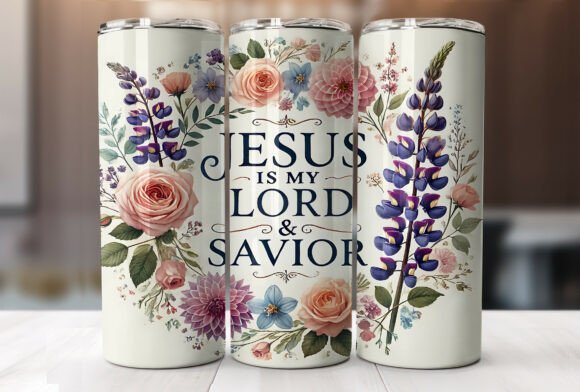
First glance at the Inspirational Faith Christian Tumbler tells you it’s built for quiet confidence—not flash, not clutter, but clarity with heart. The composition balances soft curves and clean lines: a centered cross motif, subtle floral accents, and legible yet graceful script reading “Faith Over Fear” or similar (exact phrasing varies by version). It doesn’t shout; it settles in. As a designer who’s stitched hundreds of faith-based motifs onto baby onesies, boutique aprons, and custom sweatshirts, I immediately sense this isn’t just another clipart-style emblem—it carries weight, intention, and restraint. That matters when your finished product lands in someone’s hands as a gift, a keepsake, or a daily reminder.
Where This Design Truly Lives—and Thrives
I recently used the Inspirational Faith Christian Tumbler on a set of linen tea towels for a local kitchen boutique. Not on tumblers—ironically—but on flat, breathable fabric where stitch definition and tonal harmony were critical. It performed beautifully: the satin-stitched cross held crisp edges, the script flowed without thread breaks, and the overall density felt generous without overwhelming the weave. That’s the real test—not how it looks in a digital preview, but how it breathes on cotton twill, holds up on brushed poly-blend sweatshirts, or softens gently on organic baby bodysuits.
This design shines brightest on medium-to-large embroidery fields: front panels of oversized totes, center chest placements on unisex crewnecks, or vertical runs along pillow covers. It also translates well into embroidered patches—especially when backed with heat-seal stabilizer—for church welcome kits or women’s ministry swag. Etsy sellers will find it resonates strongly in niches like nursery decor, wedding guest favors, and “quiet faith” apparel lines where subtlety reads as sincerity.
Where Caution Is Stitched Into the Process
Don’t force the Inspirational Faith Christian Tumbler into tight spaces. Its delicate filigree elements and fine lettering don’t scale down gracefully below 3.5 inches wide. On a curved cap front? Proceed only with a low-profile underlay and ultra-light tear-away stabilizer—otherwise, the inner flourishes risk distortion. On textured fabrics like terry cloth or bouclé knit, test first: fill stitches may sink unevenly, muting contrast. And on dark garments—navy, charcoal, deep burgundy—verify that the default thread palette includes enough tonal depth. A pale ecru script on black fleece can vanish unless you manually swap to cream or antique white.
Also note: while it’s labeled a *Tumbler Wrap*, its layout isn’t optimized for full-circumference wrap-around application. It’s designed for focal-point placement—not continuous rotation. If you’re planning actual tumbler wraps, confirm whether the file includes seam allowances or repeat markers. Otherwise, treat it as a versatile machine embroidery design first, a tumbler-specific asset second.
What Your Customers—and Your Brand—Actually Feel
Embroidery isn’t just decoration. It’s tactile trust. When someone receives a tote bag stitched with the Inspirational Faith Christian Tumbler, they register craftsmanship before content: the smooth satin cross, the even spacing of each word, the absence of puckering or skipped stitches. That subliminal polish elevates perceived value—even on modestly priced handmade products. For small shop owners, that means fewer returns, more repeat buyers, and stronger word-of-mouth in faith-centered communities.
It also supports brand consistency. Unlike overly ornate or trend-dependent motifs, this design avoids dated fonts or seasonal clichés. It works year-round, across generations, and alongside complementary designs (think coordinating “Hope,” “Grace,” or “Joy” variations). That makes it a reliable anchor in your digital embroidery file library—not a one-off.
Practical Notes Every Designer Should Run Through
- Always stitch a test run on scrap fabric matching your final project’s weight and stretch—especially for baby embroidery or holiday embroidery where durability and softness are non-negotiable.
- Check thread color contrast in natural light *and* under warm bulb lighting. What reads clearly on screen may blur on oatmeal linen or heather gray sweatshirt fabric.
- Review stitch density before sending to machine. Dense fill areas near the base of the cross can cause stiffness on lightweight tees—consider lightening density by 10–15% if needed.
- Confirm hoop size compatibility. Most versions fit comfortably in a 4x4 hoop, but verify before hooping expensive fabric.
- Inspect small details at 200% zoom: are serif tips clean? Do connecting strokes in the script remain intact at reduced sizes?
- Test black-and-white mockups to assess silhouette strength—this design relies on shape recognition as much as message.
- Compare light vs. dark backgrounds using printable mockups. Some versions include alternate thread palettes; others require manual swaps.
- Use appropriate stabilizer: cutaway for knits, tear-away for stable wovens, and fusible + tear-away for lightweight linens.
- Verify licensing before listing finished products on Etsy or bundling the embroidery file as part of a craft business toolkit. Commercial use rights aren’t automatic—even for Tumbler Wraps.
Final Thought: It’s Not Just a Design—It’s a Delivery System
The Inspirational Faith Christian Tumbler doesn’t need embellishment. Its strength is in what it leaves out: no visual noise, no competing elements, no forced whimsy. That makes it unusually adaptable—equally at home on a minimalist canvas tote for a Bible study group or stitched in metallic thread on a velvet holiday pillow cover. As an embroidery product reviewer and working designer, I don’t reach for this when I want attention. I reach for it when I want resonance. And in a market saturated with rushed, algorithm-driven digital embroidery files, that kind of thoughtful execution is rare—and worth every stitch.